Graveyard

Not everything survives.

Not everything I start makes it. Here is what didn't, and what it taught me.

Specimen record: INTERRED 2023 CAUSE: Market collapsed

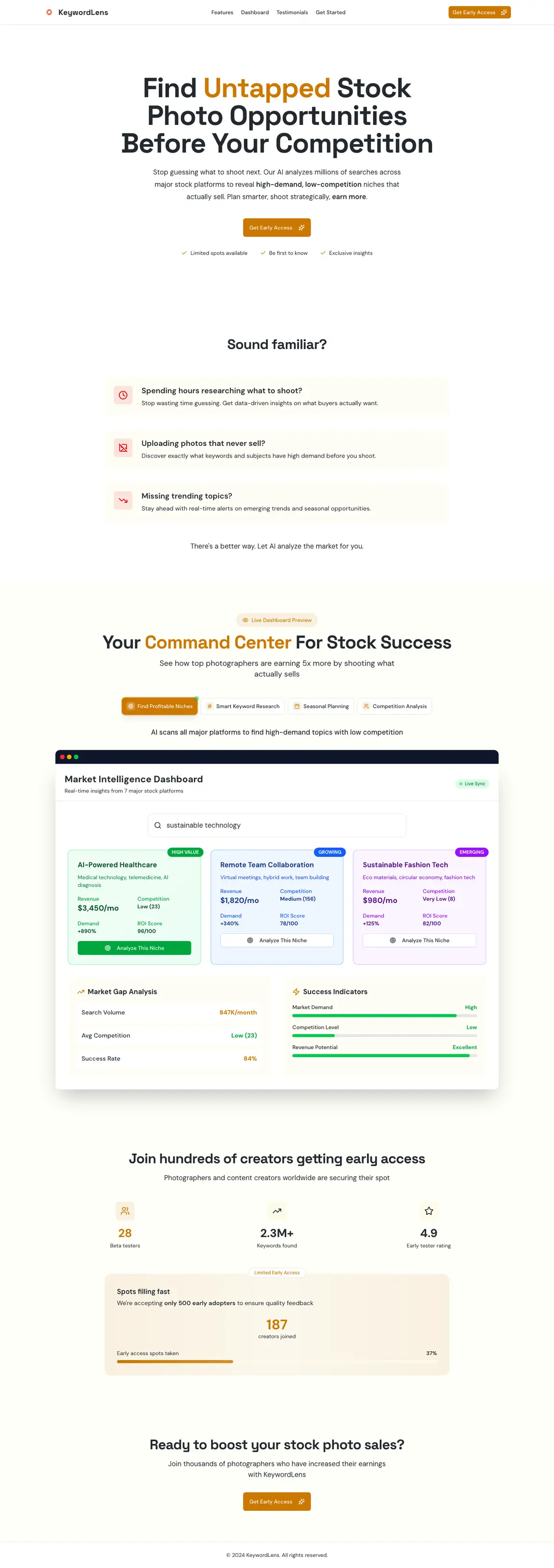
KeywordLens
getkeywordlens.com
KeywordLens interface showing keyword demand analysis for stock media platforms
KeywordLens: stock media keyword demand tool
Hypothesis
Stock photographers would pay to know what to shoot before shooting it.

A SEMrush for stock media. It analyzed searches across the major stock platforms to surface high-demand, low-competition niches, so photographers could shoot what actually sells instead of guessing.

It died the month generative AI went mainstream. The whole premise was helping people find the right photo to shoot. When anyone could generate the exact image they needed on demand, the market I was optimizing for stopped existing. Not a pivot. The ground moved.

Warning signs
  • The value proposition depended entirely on the stock-photo demand market continuing to exist as it was.
  • Generative image models were going mainstream while the tool was still optimizing what humans should shoot.

What it taught me: you can execute well and still be on the wrong side of a shift you didn't see coming. Timing isn't a detail. It's the whole bet.
Specimen record: INTERRED 2024 CAUSE: No market validation

HeyDaniel

heydaniel.app
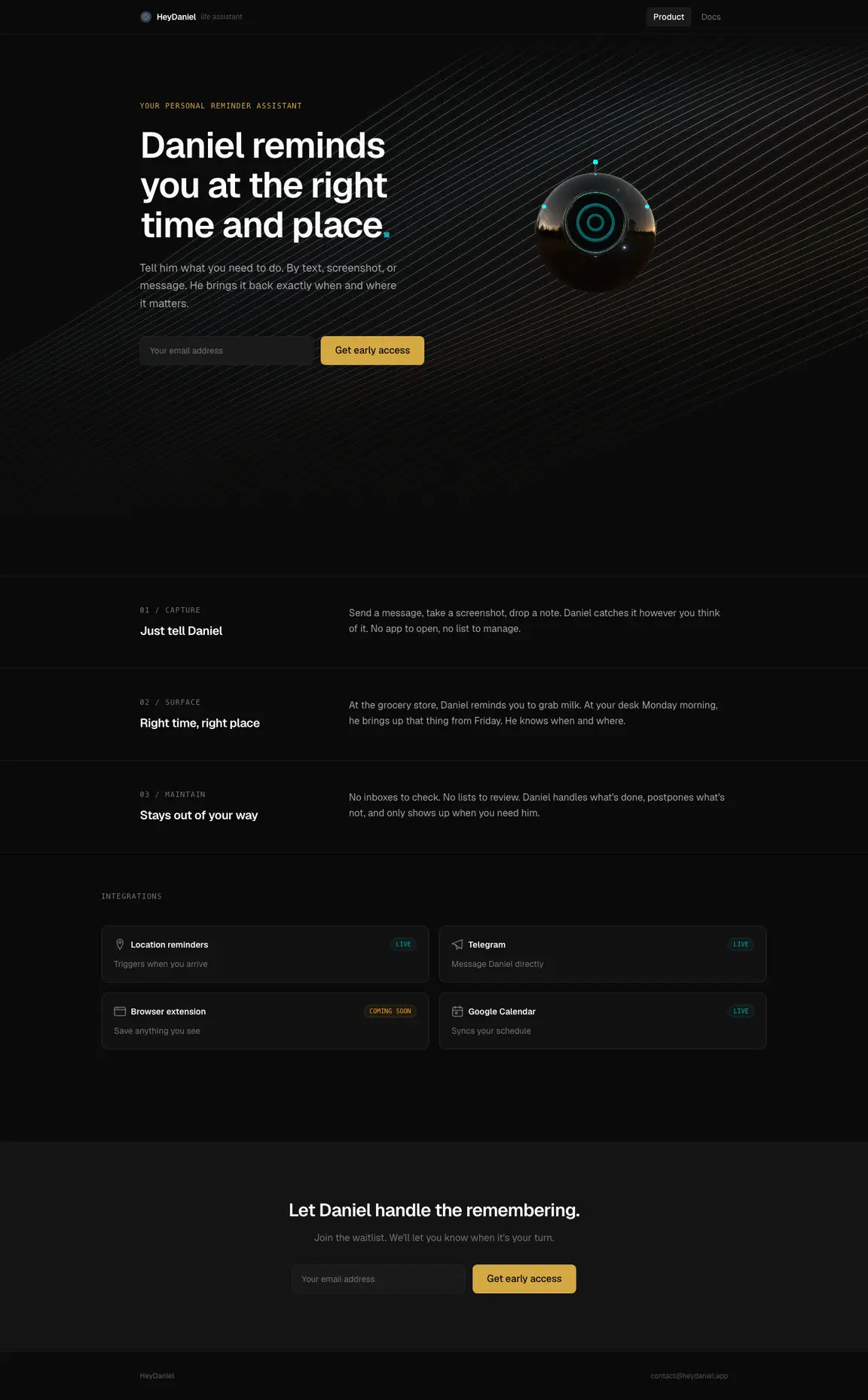
HeyDaniel app interface showing context-aware reminders and task capture
HeyDaniel: context-aware reminder assistant
Hypothesis
If capturing and remembering tasks cost nothing, other people would want it the way I did.

A context-aware reminder assistant. You’d send it a task by Telegram, a screenshot, or a note, and it would surface the right one based on where you were and what your day looked like. Walk into a shop, your list appears. Capturing cost nothing, remembering cost nothing.

It worked. For me. Generalizing it for other people would have meant a lot more engineering, and I never got any market validation to justify the work. So I stopped building it as a product. I still use it every day.

Warning signs
  • No one but me ever asked for it — every feature was validated against an audience of one.
What survived
I still use it every day — the product died, the tool lives.

What it taught me: I'll happily pour engineering into a problem before checking whether anyone else has it. Validation first, build second. (Also: a tool that only serves you isn't a failure. It just isn't a business.)